

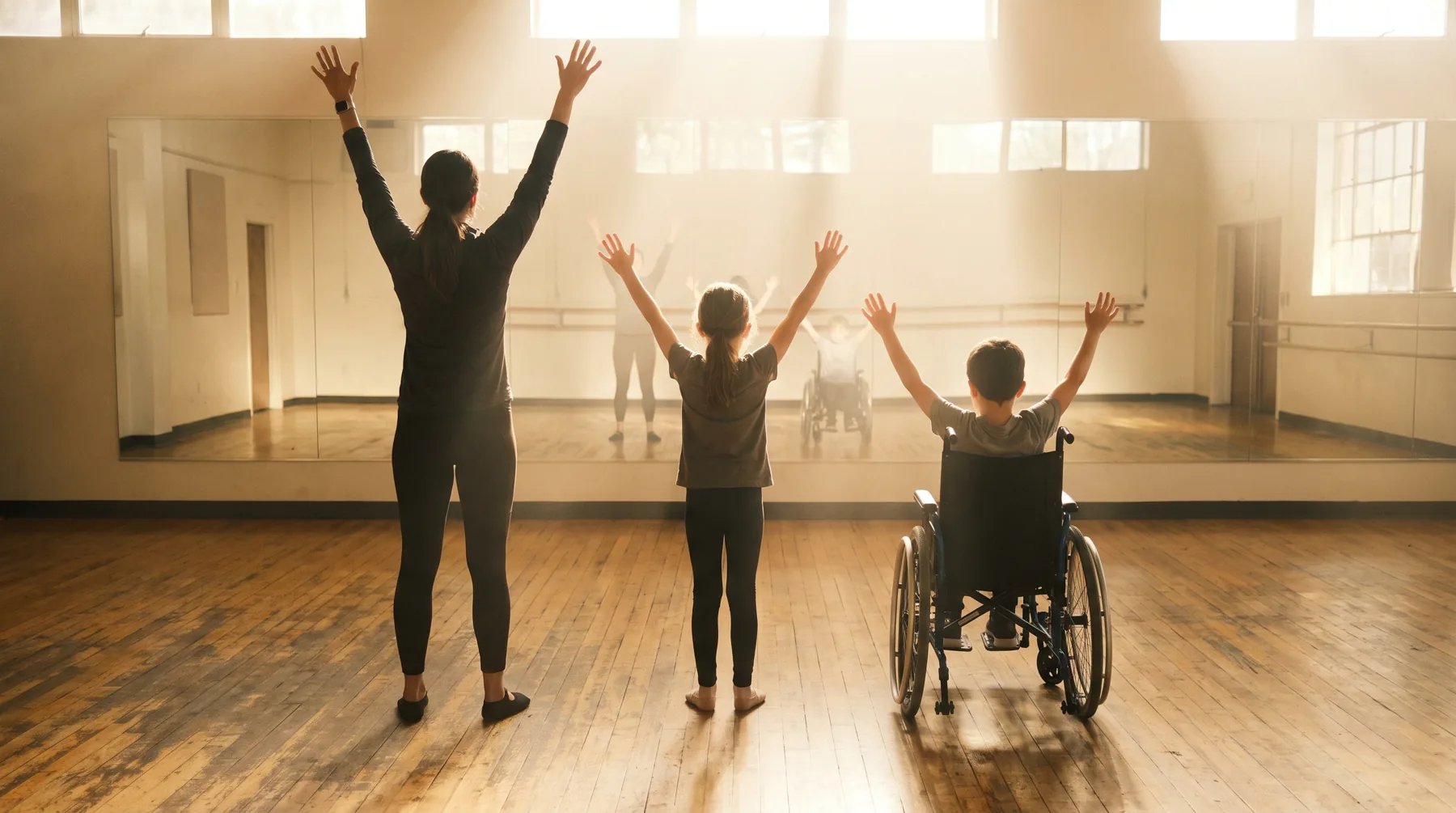
Families are asking. Most studios cannot yet answer.
More than 8.1 million students ages 3–21 received special education services under the Individuals with Disabilities Education Act in 2024 — up 3.8% in a single year.see footnote 1
The demand is documented. In a community needs assessment of the dance sector, 90% of studios reported being approached by families seeking inclusive classes, and 75% of parents said the availability of adaptive classes matters to them.see footnote 2 Studios are being asked. Most cannot yet answer — not from indifference, but because adaptive programming requires training, equipment, and funding a small studio cannot absorb alone. Where programs exist they cluster in major metropolitan areas; families in rural and underserved communities travel hours or go without.
Passionate instructors, no infrastructure
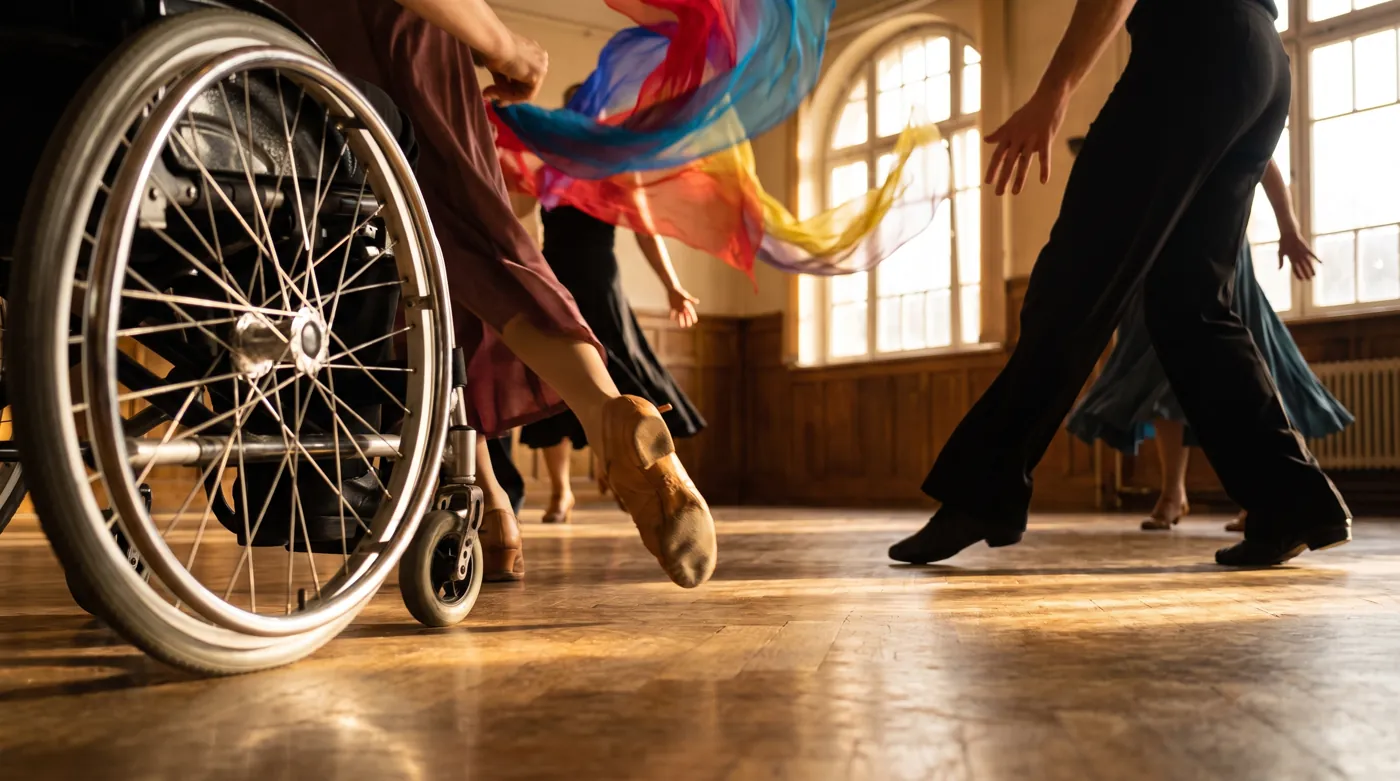
Dance instructors are already doing this work — in community centers, church basements, and after-school programs, often unpaid, often improvising a curriculum as they go. The work is extraordinary. The support behind it is close to nonexistent.
Without funding, they burn out. Without specialized training, they struggle to serve children with complex needs safely. Without organizational backing, programs stay small and fragile — and when one instructor moves or steps back, the program disappears entirely.
A program that depends on one person’s unpaid goodwill is not access. It is luck. That fragility is the problem worth solving.
Fund, train, and scale
Three moves, in order. Money first, because unpaid programs die; then a curriculum a volunteer can actually teach; then the network that lets a program in one town become ten.
1 · Fund instructors
Direct stipends and program grants to instructors teaching children with physical, intellectual, and developmental disabilities. A $3,000 grant underwrites a full 16-week term serving 10–15 children.
| Line item | Amount |
|---|---|
| Instructor stipend (16 sessions) | $1,600 |
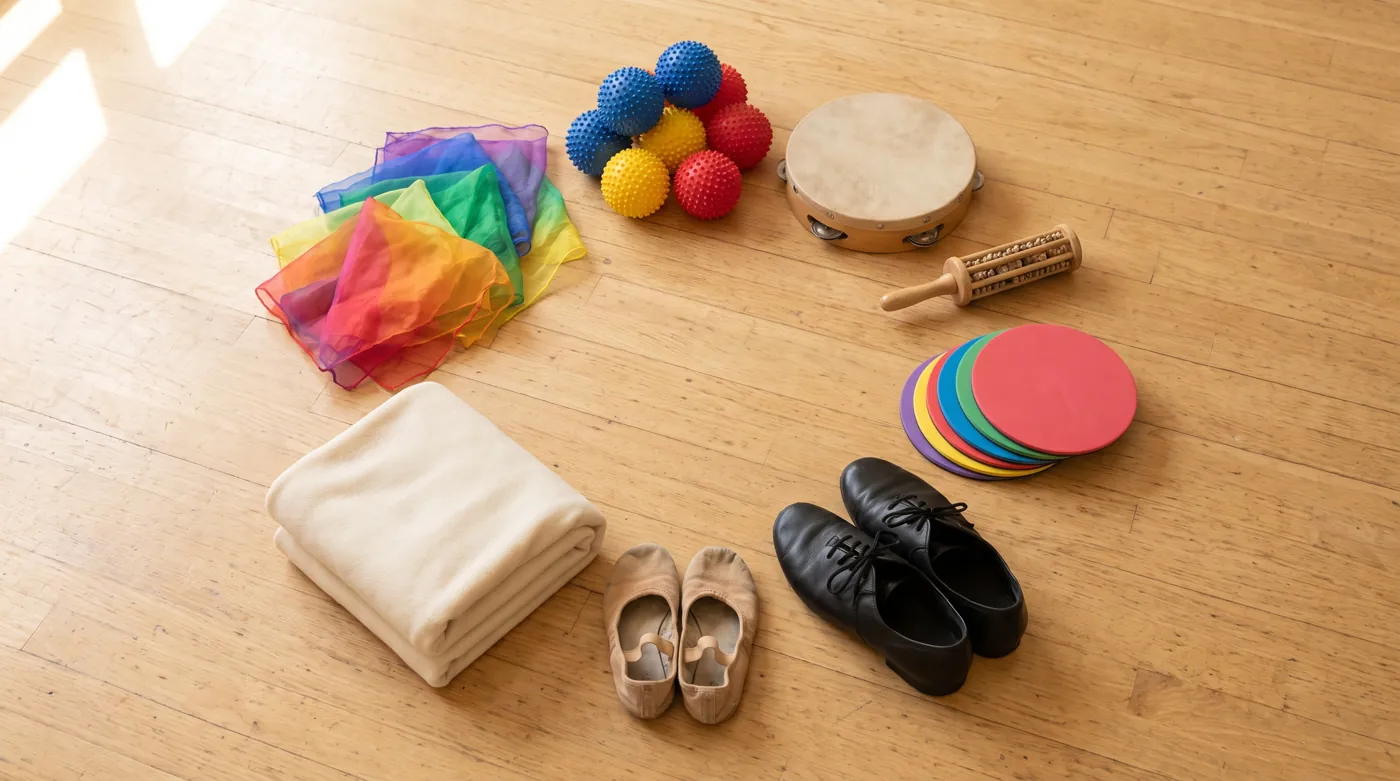
| Adaptive equipment and sensory tools | $600 |
| Accessible studio time, where not donated | $600 |
| Curriculum materials and administration | $200 |
| Total | $3,000 |
Where a partner studio donates its space, that $600 stays in the program — extending the term, adding children, or seeding a second cohort.
2 · Create structured programs
Adaptive dance curricula a volunteer instructor can actually implement, with specific guidance for teaching children who are autistic or who have Down syndrome, cerebral palsy, intellectual disabilities, or sensory processing differences.
Training and curriculum, not a certification. Completing it does not credential an instructor.
3 · Scale through the network
The Foundation’s platform already connects 1,280 studios worldwide. We use it to find communities with unmet need, match them with trained instructors, and give them the infrastructure to run and measure the programs.
Dance Without Limits launches in the United States and scales internationally through that network.
Not a nice-to-have. A studied intervention.
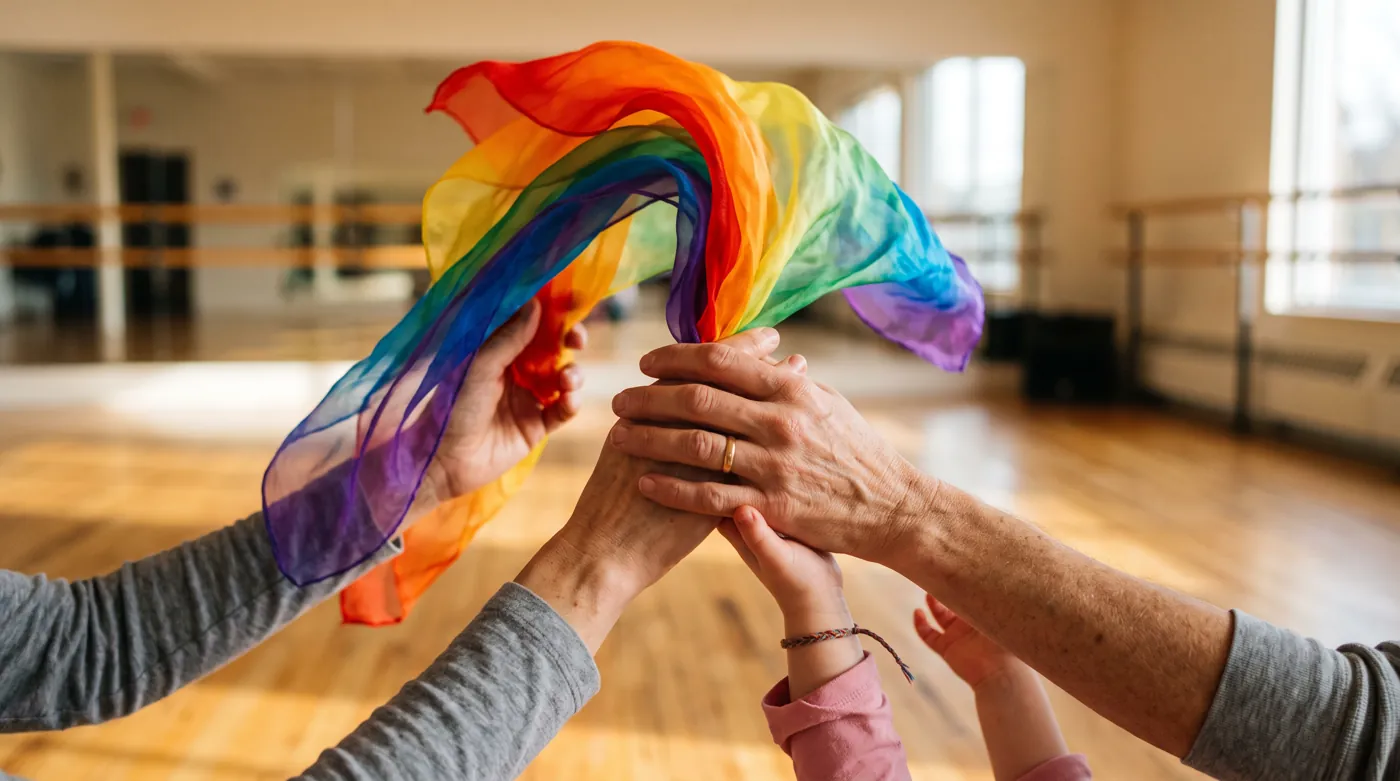
A systematic review and meta-analysis examined dance’s effects on children with disabilities across four dimensions.see footnote 3 A separate 2023 review of dance interventions for individuals with cerebral palsy drew on fourteen studies, nine pooled, and found a large overall effect for cognitive, motor, and social-emotional function.see footnote 4
- Physical
- Gross motor skills, balance, coordination, strength, and flexibility.
- Cognitive
- Memory, sequencing, and sustained attention, built through choreographed movement patterns.
- Psychological
- Reduced anxiety, improved self-esteem, and greater physical confidence and body awareness.
- Social
- Communication skills, reduced isolation, and a genuine sense of belonging among peers.
The evidence base extends across conditions: dance has been shown to support motor, cognitive, and psychosocial functioning in autism spectrum disorder, Down syndrome, cerebral palsy, and intellectual disability.see footnote 5
Safety before growth
Children are at the center of this program, and safeguarding comes before growth. Every funded instructor is required to complete a background check, acknowledge applicable mandated-reporter obligations, and agree to our child protection policy. No child appears in a photograph or video without written parent or guardian consent, and consent can be withdrawn at any time. Host studios carry their own liability coverage.
One class is $100. One term is $3,000. Either way, a child gets the floor.
Give once, or give monthly and fund a class every month of the season.
Two more ways in
Dance instructors
Teach adaptive dance, or want to learn? Register your interest and we will be in touch about training, curriculum, funding, and the safeguarding requirements every funded instructor completes.
Studio owners
Open your doors. Donate one hour of accessible studio time per week to host a class — and send $600 per term straight back into the program.
Fund restriction and variance
Gifts designated to Dance Without Limits are restricted to that program. If the program cannot proceed, or if contributions exceed what it can deploy, World Dance Foundation will apply the remaining funds to programs serving substantially similar charitable purposes, as determined by its Board of Directors. Grants are made at the board’s discretion; no gift is directed to a named individual.
World Dance Foundation is the operating name of World Dancing Inc., a Delaware nonprofit corporation recognized as tax-exempt under Section 501(c)(3) of the Internal Revenue Code (EIN 33-2738731).
On language: we describe children the way their communities ask to be described. Many autistic people prefer identity-first language; many other communities prefer person-first. We follow each community’s stated preference rather than imposing one convention.
On the photographs: the images on this page are illustrative and composed so that no child is identifiable. Program photography will appear only with documented parent or guardian consent.
Sources
- 1. Council for Exceptional Children, Analysis of 2024 IDEA Data Shows Increase in Students Served — 8,194,424 students ages 3–21, up 3.8%. exceptionalchildren.org (opens in a new tab) back to reference 1
- 2. The Dance Ability Movement, Fostering Inclusivity in Dance: Insights from Our Community Needs Assessment. danceabilitymovement.com (opens in a new tab) back to reference 2
- 3. Physical, cognitive, psychological and social effects of dance in children with disabilities: systematic review and meta-analysis. researchgate.net (opens in a new tab) back to reference 3
- 4. The efficacy of dance interventions for the activity and participation of individuals with cerebral palsy — a systematic review and meta-analysis, Disability and Rehabilitation (2023). tandfonline.com (opens in a new tab) back to reference 4
- 5. A synthesis of the characteristics of dance interventions engaging adults with neurodevelopmental disabilities: a scoping review (2024). pubmed.ncbi.nlm.nih.gov (opens in a new tab) back to reference 5