

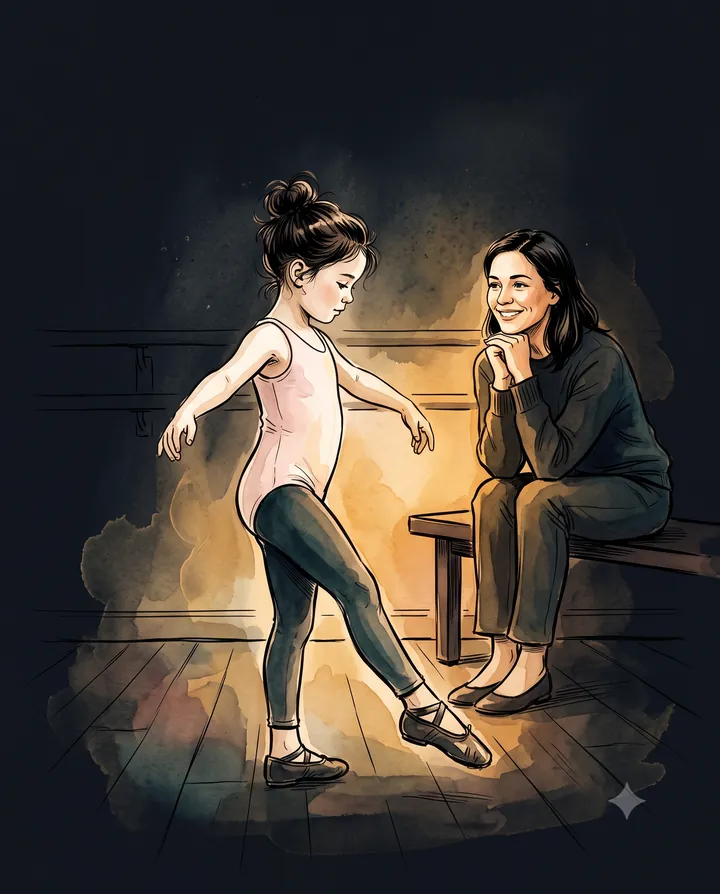
Ballroom gives children confidence, fitness, friendships, and a poise that lasts a lifetime — and it stays that way when the joy stays first. Here's how to support a young dancer well, from the first class to the first competition.
01Is my child old enough?
Many studios start children young with playful pre-dance classes, moving into structured lessons as they're ready. Competitive youth dancesport is organized into age divisions — commonly juvenile, junior, and youth categories before the adult ranks — though the exact names and ages vary by organization. A good studio will place your child appropriately.
02How to choose a dance studio for your child
Look for qualified instructors, a positive and age-appropriate atmosphere, clear communication, and visible attention to safety and child wellbeing. Trust your instincts about how the staff interact with children, and ask about their experience teaching young dancers.
03Keeping it healthy and fun
Children thrive when dance stays joyful and pressure stays low. Celebrate effort and improvement rather than placements, watch for signs of burnout, and make sure dance leaves room for school, rest, and the rest of childhood. Praise the work, not just the trophies.
04What youth competitions are like for families
Youth competitions run much like adult ones — heats, rounds, costumes, early mornings, and a lot of waiting. Pack patience and snacks, connect with the other parents, and let your child set the emotional tone. Your steady, low-key support matters more than any result.
05Costs and commitment
Youth dancing can start very affordably with group classes and grow from there. Be honest with yourself and your child about time and budget, revisit it as they progress, and remember that the real lessons of dance — discipline, grace, resilience — pay off far beyond the floor.
Good to know
A note on safety
If anything about a coaching environment ever feels wrong, trust that instinct and speak up. Your child's safety and comfort come first, always.
Common questions
- What are the age divisions in youth dancesport?
- Commonly juvenile, junior, and youth categories before the adult ranks — exact names and age ranges vary by organization, and a good studio will place your child appropriately.
- Is competitive dance healthy for kids?
- Yes, when joy leads. Celebrate effort and improvement over placements, watch for signs of burnout, and make sure dance leaves room for school, rest, and the rest of childhood.
- How much does youth ballroom dancing cost?
- It can start very affordably with group classes and grow from there with private lessons, competitions, and attire. Be honest about time and budget, and revisit both as your child progresses.